
 My Chart Patient Portal
 Emergency Care
 Urgent Care
 Language Services
 Medical Records
 News & Events
 Charitable Giving
 Programs & Classes
Published: February 16, 2026
How to Choose the Right Car Seat Before Baby Arrives
The first drive home from the hospital with your newborn is an unforgettable moment, and we at The Elliot want to make sure it’s also a safe one. From choosing the right car seat to installing it correctly, this guide walks you through everything you need to know, including car seat types, installation tips, positioning your baby correctly, and where to get hands‑on support.
Why Car Seat Safety Matters
Motor vehicle crashes remain a leading cause of injury for infants and young children. According to The Centers for Disease Control and Prevention (CDC), using a properly installed car seat reduces the risk of fatal injury by up to 71% for infants and 54% for children ages 1 to 4. The National Highway Traffic Safety Administration (NHTSA) also reports that nearly 75% of car seats are installed incorrectly, which significantly reduces their effectiveness in a crash.
The good news? With the right information and a little practice, you can ensure your newborn travels safely from day one.
Choosing the Right Car Seat
Selecting the right car seat isn’t just about comfort, it’s about safety. When picking a car seat, you want to choose a seat that is appropriate for your child's age, weight, and developmental level. Always purchase your seat from a reputable retailer to avoid counterfeit seats and register your car seat after purchasing to receive important safety and recall information from the manufacturer. It is important to use a new car seat because secondhand car seats have the potential to have been damaged, been in an accident, or expired, which could cause them to not work correctly.
Plan to purchase and install your car seat a few weeks before your due date. This gives you time to practice installation and get the seat inspected at a car seat inspection station.
Types of Car Seats
Car seats come in all shapes and sizes, which can feel overwhelming when you’re trying to make the best choice for your child. The good news? Safety doesn’t have to break the bank, many high-quality car seats are available at reasonable prices, and all seats must meet the same US Federal Motor Vehicle Safety Standards.
-
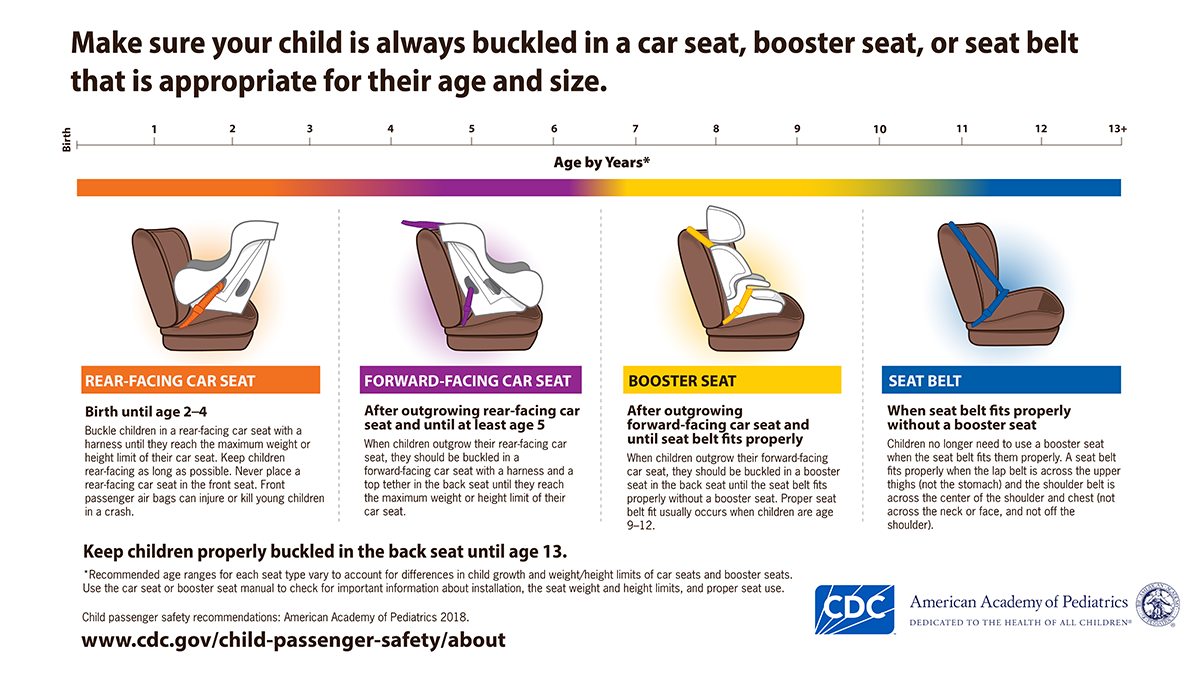
Rear facing Car Seats (Infant Seats): Designed specifically for newborns and younger infants, these seats often include a detachable base for easy in‑and‑out use. They have lower height and weight limits and are typically the first seat your baby will use before transitioning to a convertible or all‑in‑one seat.
-
Convertible Car Seats: These seats begin rear‑facing and can be turned forward‑facing as your child grows. They offer extended use and accommodate higher rear‑facing limits.
-
All-in-One Seats: These grow with your child from rear‑facing to forward‑facing and eventually to a booster seat. Ideal for long-term use.
-
Foward-facing Seats: These are used for older children who have outgrown the rear‑facing limits of their seat. However, the American Academy of Pediatrics recommends keeping your child rear‑facing as long as possible, until they reach the highest rear‑facing height or weight limit allowed by the manufacturer. This position offers the best protection for your baby’s head, neck, and spine in a crash.
Check this out! The Car Seat Finder Tool is an easy-to-use tool that lets you compare seats and ease-of-use ratings to find the right car seat for your child. Learn more
How to Install a Car Seat Safely
Installing a car seat correctly is just as important as choosing the right one. Even the safest seat won’t protect your baby if it’s not installed properly. These steps help ensure a secure fit:
-
Always Use the Back Seat: The back seat is the safest place for infants. Never place a rear‑facing seat in front of an active airbag.
-
Choose One Installation Method: Use either the LATCH system (Lower Anchors and Tethers for Children) or the seat belt, not both, unless your car seat manual specifically allows both to be used. Both Seatbelt and LATCH installation are equally safe when used correctly.
-
Check for a Snug Fit: Once installed, the car seat should not move more than one inch side-to-side or front-to-back when you tug at the belt path. If it does, tighten the straps or recheck your installation.
-
Set the Correct Recline Angle: The recline angle is critical. All seats have a built-in level indicator or line that should be parallel to the ground when parked on a flat surface. A proper angle helps keep your baby’s airway open and prevents their head from falling forward.
-
Register Your Car Seat: After installation, register your car seat with the manufacturer. This ensures you’ll be notified of recalls or safety updates.
-
Schedule a Car Seat Check: It is recommended that you get your car seats inspected by a Certified Child Passenger Safety Technician (CPST) after installation. You can find an inspection station near you at Safe Kids or BeSeatSmartNH.org.
How to Secure Your Baby Safely in the Car Seat
Once your seat is installed, make sure your baby is secured properly:
- Use a 5‑point harness for all rear‑ and forward‑facing seats.
- For rear‑facing seats, harness straps should be at or below the shoulders.
- For forward‑facing seats, straps should be at or slightly above the shoulders.
- Harness straps should be snug. You shouldn’t be able to pinch any slack at the shoulder, hips, or abdomen.
- The chest clip must sit at armpit level.
- Avoid bulky clothing (including winter jackets, snow suits, or any other heavy outerwear). After securing your baby, you may place a blanket over the straps.
- Never add accessories, inserts, or padding that did not come with the car seat.
Frequently Asked Questions
It is not recommended to use a second-hand car seat as it is hard to know its full history. Never use a seat that’s been in a crash, expired, or missing parts. Always check the expiration date and manufacturer’s recall list.
Your care team will ensure you have an appropriate car seat before you are discharged. However, our staff does not perform full installation checks. We recommend visiting a CPST before delivery for a complete inspection. Our staff can demonstrate proper infant positioning in the seat and provide referrals to certified technicians.
Seat belt installation is just as safe when done correctly. Follow instructions in your car seat manual for proper installation.
Learn More with Elliot Childbirth Education Classes
At The Elliot, your family’s safety is our priority, and that begins before your baby even arrives. We are here to make sure you feel confident and prepared for that first ride home and all the days ahead. Learn about car seat safety, newborn care, breastfeeding, labor preparation and more from our experienced nurse educators.