
 My Chart Patient Portal
 Emergency Care
 Urgent Care
 Language Services
 Medical Records
 News & Events
 Charitable Giving
 Programs & Classes
Published: February 10, 2026
Understanding Broken Heart Syndrome: Symptoms, Causes, and Recovery
By Ashley Russell, MD
Broken Heart Syndrome is a stress-related heart condition that temporarily weakens the heart muscle and mimics a heart attack but is not caused by blocked arteries. It is most common in women over age 50 and is triggered by intense emotional or physical stress. Symptoms require urgent medical evaluation, but with proper care, most patients recover fully.
We often use the phrase “broken heart” to describe emotional pain after a stressful experience. For most people, it is a figure of speech. But in some cases, intense stress can trigger a real and serious heart condition known as Broken Heart Syndrome.
Broken Heart Syndrome, also called stress cardiomyopathy or takotsubo cardiomyopathy, occurs when the heart muscle suddenly weakens in response to severe emotional or physical stress. The symptoms can closely resemble a heart attack, which is why prompt medical evaluation is important. The good news is that the condition is usually temporary, and with timely diagnosis and treatment, most patients recover and return to their normal lives.
What Is Broken Heart Syndrome?
Broken Heart Syndrome is a temporary condition in which the heart’s main pumping chamber becomes weakened, usually in response to intense stress. When this happens, the heart does not pump blood as effectively as it should, which can cause symptoms that closely resemble a heart attack.
Unlike a heart attack, Broken Heart Syndrome is not caused by blocked coronary arteries or plaque buildup. Instead, it is believed to occur when the body’s stress response temporarily affects how the heart functions. According to the Mayo Clinic, these hormone surges can interfere with the heart’s ability to pump effectively, even in people with no prior heart disease.
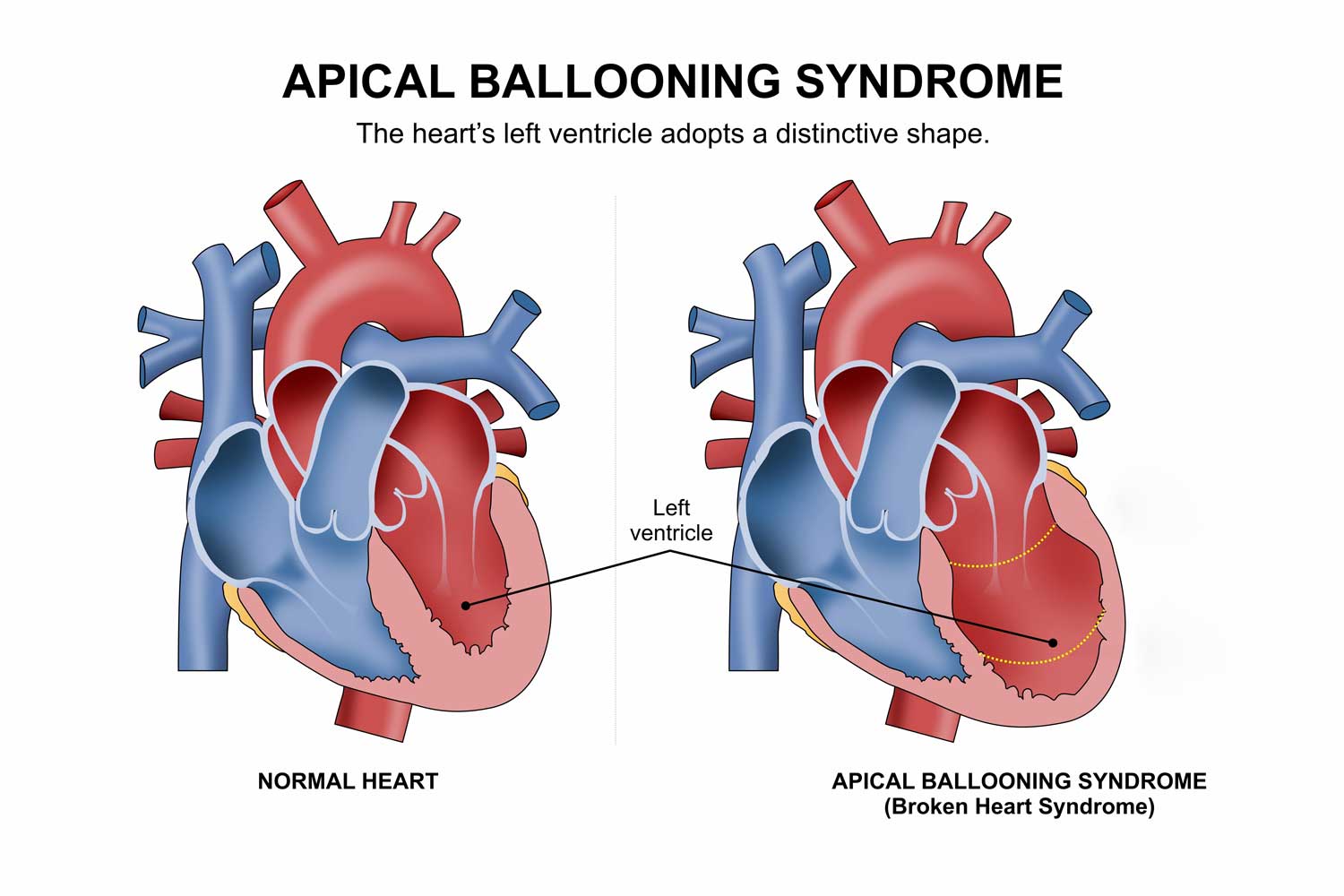
The condition was first described in Japan, where doctors noticed that the heart takes on a distinctive shape during an episode. The term “takotsubo” refers to a pot used to trap octopus, which resembles the shape of the weakened heart.
How Does Broken Heart Syndrome Occur?
Research strongly suggests that stress hormones such as adrenaline play a central role. During intense emotional or physical stress, the body releases large amounts of these hormones. In some individuals, this surge can temporarily stun the heart muscle and disrupt normal contraction.
Both the Mayo Clinic and Cleveland Clinic describe this process as a stress-related response that overwhelms the heart rather than permanently damaging it.
Triggers may be emotional or physical. Emotional triggers can include the death of a loved one, extreme fear, intense anxiety, or sudden shock. Physical triggers may include serious illness, stroke, surgery, or trauma. In rare cases, even very strong positive emotions, such as extreme excitement or surprise, have also been reported.
Who Is Most at Risk?
Broken Heart Syndrome can affect people with or without a history of heart disease. However, certain groups are more commonly affected.
- Women account for about 89 percent of diagnosed cases, particularly women who are postmenopausal.
- More common in adults over the age of 50
- Less common in men, but associated with higher rates of complications when it does occur, according to the American Heart Association.
What Are the Symptoms?
Symptoms of Broken Heart Syndrome often appear suddenly and can be frightening. The most common symptoms include chest pain and shortness of breath. Some patients may also experience dizziness, fainting, or rapid or irregular heartbeats.
Because these symptoms can be difficult to distinguish from a heart attack, they should always be treated as a medical emergency. Chest pain and breathing difficulties should never be ignored, regardless of suspected cause.
How Is Broken Heart Syndrome Diagnosed?
Since Broken Heart Syndrome can look like a heart attack, doctors focus first on ruling out blocked coronary arteries or other life-threatening causes.
Evaluation often includes an electrocardiogram to assess heart rhythm, blood tests to measure heart enzymes, and imaging studies such as an echocardiogram to evaluate how well the heart is pumping. In many cases, patients also undergo cardiac catheterization, a procedure that allows doctors to look directly at the coronary arteries.
The heart is remarkably resilient, and in most cases, patients recover fully with the right care and support.
In people with Broken Heart Syndrome, these tests typically do not show significant plaque buildup or blocked arteries, which are typically seen in a traditional heart attack. Instead, imaging often reveals a characteristic pattern of heart muscle weakness, most commonly affecting the lower portion of the heart. These findings help doctors distinguish Broken Heart Syndrome from other cardiac conditions and confirm the diagnosis.
How Is Broken Heart Syndrome Treated?
Treatment focuses on supporting the heart while it recovers. Most patients are monitored in the hospital during the early phase of the condition.
Medications commonly used to treat heart failure may be prescribed temporarily to reduce strain on the heart and support healing. As heart function improves, many patients are able to taper off these medications under medical supervision.
Addressing the underlying stressor is also an important part of recovery. When emotional stress plays a role, patients may benefit from mental health support, counseling, or stress-management strategies as part of comprehensive care.
Can you really die from a broken heart?
While deaths from Broken Heart Syndrome are rare, the condition can place significant strain on the heart, particularly in older adults or those with other medical conditions. Because the symptoms closely resemble a heart attack, immediate medical evaluation is essential to rule out other causes and provide appropriate treatment.
For most people, Broken Heart Syndrome is temporary, and full recovery is expected. The heart usually recovers within weeks to months, and most people return to their usual activities. Repeat episodes are uncommon, and follow-up care helps make sure recovery is complete.
When Should You Seek Care?
Chest pain, shortness of breath, or sudden heart-related symptoms should never be ignored or assumed to be caused by stress alone. Prompt evaluation allows doctors to determine the cause and begin appropriate treatment as quickly as possible.
A Final Thought
Broken Heart Syndrome is a reminder that emotional stress can have real physical effects on the heart. Taking symptoms seriously, even when they occur during stressful moments, is an important part of protecting your health.
Remember, caring for your heart also means paying attention to the physical and emotional factors that affect it over time. Ongoing heart health benefits from coordinated care, advanced diagnostics, and a team that understands how complex conditions can present and evolve. At the Elliot Heart and Vascular Center in Manchester, New Hampshire, our cardiologists provide comprehensive evaluation and personalized care to support patients across Southern New Hampshire at every stage of their heart health journey.
If something does not feel right, trust your instincts and seek care. Early evaluation allows doctors to rule out serious conditions and begin the right treatment. With proper care, most people recover fully and go on to live healthy, active lives.
Learn more about how Elliot Heart and Vascular Center is advancing heart care in New Hampshire.
Stay informed about your heart health
Subscribe to receive periodic newsletters featuring heart health education, services, and news from Elliot’s Heart and Vascular team.